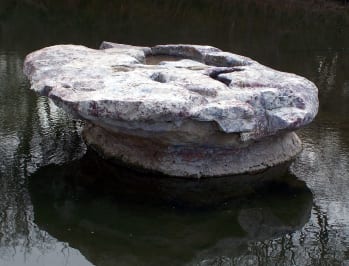
 "The Round Rock of Round Rock Texas" by Larry D. Moore. Licensed under CC BY-SA 3.0 via Wikimedia Commons
While many Round Rock residents have played along the banks of the Brushy Creek and taken pictures of the historic ‘round rock’, few know the rich history of the area. Did you know that the growing suburb of Austin has actually been inhabited by humans since at least 9,200 B.C.? The earliest inhabitants arrived during the late Ice Age! Many relics and flint tools have been found in dig sites near Brushy Creek and the San Gabriel River in Georgetown, and ancient skeletal remains have been found close to Leander. The earliest known Native American occupants were the Tonkawa, who created pathways throughout the area following buffalo.
Eventually, the area was developed by Anglo settlers, and paved roads took the place of Native American pathways. The most famous paved road is an immigration route which passed from Georgetown to Austin, called the ‘Double File Trail’, named because the path was wide enough for two horseman to ride side-by-side.
In 1851, a small community was formed on the banks of the Brushy Creek, close the ‘round rock’ which marked a low water crossing for wagons and horses. This route became known as the Chisholm Trail. You can still see many of the markings from wagon wheels in the creek when the water is low. In 1878, downtown Round Rock was the site of a historic gunfight between train robber, the infamous Sam Bass, and the Texas Rangers. Bass was shot and killed during the shootout and is buried in the Round Rock Cemetery.
Today, walking through Chisholm Trail Crossing Park and downtown Round Rock is like walking through history. Many of the buildings and land marks from the first settlers have been preserved; including the old Saint Charles Hotel and Sam Bass’ original headstone (on display at the Round Rock Library).
